2000 dot com bubble
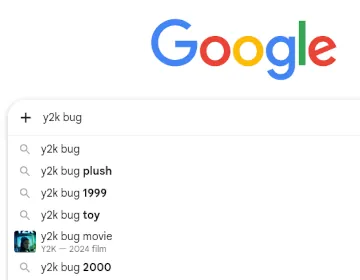
In 1999, major computer software would stop working because they only stored the last 2 digits of the year. The Y2K bug created high demand for programming skills to fix these softwares, increasing the overall valuation of software companies, especially the ones from the Internet. Suddenly this demand vanishes, causing the dot com bubble and blaming the web for it.
- Desktop applications
- Operating system
2008 housing bubble
Fintech 2.0 high demand for automatizing banks created high demand for programming skills, but the automations such as Mortgage Electronic Registration System couldn't verify frauds as good as a human being. The result was a bubble of junk bonds that burst and compromised the thrust on centralized institutions.
- Web
- Blockchain
2016 mobile app bubble
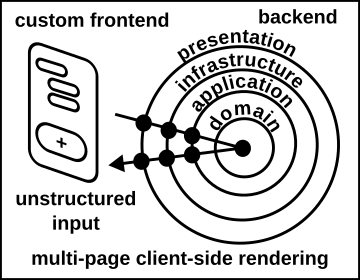
The aggressive strategy of acquisition of app companies led to exaggerated valuation compared to the revenue. Everybody wanted to build an app and strike it rich. One big concern was Facebook, but it was the small companies such as Snapchat that lost 80% of value.
- Mobile apps
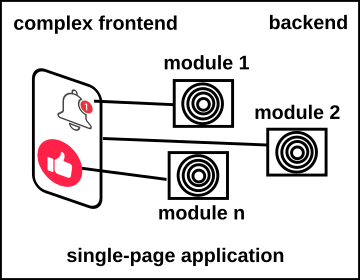
- Frontend-Backend Webapps
2024 AI bubble
Cherry-picking of AI successful cases masks its flaky behavior. However, real world cases such as Deloitte's Australian broken report or DuoLingo's nonsense content points out that AI isn't ready for autonomous work despite being thirsty on water, energy and datacenters. Meanwhile, Deutsche Bank reported in 2025 that never in history companies had spent so much money without a proven ROI.
- .ai Apps
- Vibe Code
is the key to success
Car configuration
It is done during the purchase. You choose the body configuration, the color, the engine configuration, the powertrain configuration.
They are highly standardized single-choice options such as dinner's menus. All these configurations are well-established by vendor's quality control and battle-proven by thousands of users. They are covered by the vendor's guarantee, so they will be cheap to maintain without much of a headache.
- Web 1.0
- HTML, CSS, Bootstrap
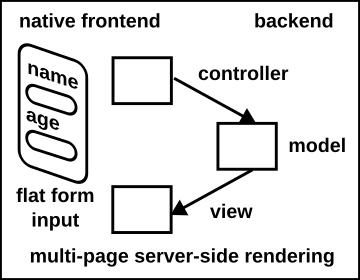
- MVC architecture
- Database schema
Car customization
Instead of relying on single-choice options, they are arrangements where the order and position matters. They include body kits, lightning, branded paint job, tinted windows, exhaust system, suspension, braking, seating, audio, touchscreen and so on.
They are not covered by the car guarantee and are less reliable because you can mess the order of things and make it fail. However, the building blocks are highly standardized and very dependable.
- XML
- SQL
- BPMN, DMN
- EIP
Car tuning — tailored
When only making arrangements is not enough and you need fine control of how it works to optimize the most, you need car tuning. Here you can modify the engine itself, add turbo, and whatever your imagination can think.
Because you can micromanage how it works, you can enhance the performance. But, this is highly expensive to build, to maintain and to use. It is expected that things will fail all the time and this will cost you a lot of time and money until you stabilize it. If you have constant improvements, you'll have constant fixes as well.
- PHP
- Java
- Python
- JavaScript
Car tuning — replica
Because car tuning is high-cost to build and stabilize it, just look for a Fast and Furious model, and replicate it, right? Yes and no.
The whole purpose of tuning is to adjust to a very specific need, that may be not the same as yours. When you copy a model, you're committing with the choices someone made on your behalf. Slightly different scenarios can cause a poor-performance or maybe not even work for you. Plus, it is not as dependable as a more standardized solution. And if you are willing to retune it, you'll have to deal with all the maintenance of your own modifications and the modifications you built upon.
- RAD/Web Templates
- Ruby on Rails Scaffolding
- NoCode/LowCode
- VibeCode/AI Generated Code